Category Archives: Parenting

5 Signs Your Teen Needs More Than Just “Good Advice,” They Need a Life Coach

Parenting a teenager can feel like living on a roller coaster. One day your teen is talkative and hopeful; the next day, they are silent, irritable, or overwhelmed. You give them your very best advice, you share your own experiences, you remind them of what they “should” do… and still, nothing seems to change.

Sometimes, it is not that your advice is wrong. It is that your teen needs a different kind of support; the kind a neutral, trained Life Coach can provide.

Below are five common signs that your teen may need more than just “good advice.”

1. Your Teen Has Started to Shut Down

You notice your teen:

  • Answers with “I’m fine” or “I don’t know” to almost everything
  • Spends more and more time alone in their room
  • Avoids family conversations or eye contact

Parents often feel this as a wall. You try to talk, they shut down. You push a little more, they pull away further.

A Life Coach gives your teen a safe, neutral space where there is no judgment, no punishment, and no “parent history.” This often makes it easier for teens to open up, be honest about their thoughts, and explore what they are truly feeling.

2. Anger Shows Up Quickly and Strongly

Some teens do not shut down; they explode.

  • Frequent arguments over small issues
  • Doors slamming, yelling, or sarcastic comments
  • Anger that seems bigger than the situation

Often, this anger covers up fear, confusion, stress, or sadness. Parents may respond with discipline, lectures, or trying to “fix it,” which can unintentionally make the teen feel misunderstood.

A Life Coach helps teens learn to recognize their triggers, put words to their emotions, and practice tools to manage anger in healthier ways. Instead of just saying “calm down,” coaching teaches how to calm down.

3. School Is Becoming a Battle

You see worrying changes such as:

  • Dropping grades or missing assignments
  • Avoiding homework until the last minute
  • Increased complaints about teachers or classmates
  • Skipping classes or wanting to stay home frequently

Parents often respond with consequences, such as no phone, no outings, and more rules. While structure is important, many teens are struggling with motivation, focus, organization, or self-belief—not just “laziness.”

A Life Coach works with teens to:

  • Break big tasks into manageable steps
  • Create simple routines and systems for homework
  • Build confidence by setting and reaching small academic goals
  • Talk through school stress, peer pressure, and performance anxiety

This turns school from a constant fight into a place where your teen can regain a sense of control.

Here are the first three tips out of five to help you support and empower your teen. If you would like to receive the remaining two tips, please send an email to niecatlifecoach@yahoo.com, and I will be happy to share them with you so you can continue to strengthen your relationship and your teen’s confidence.

Schedule a FREE 20-Minute Session

If you feel that your teen needs more than another lecture or “good advice,” you do not have to figure it out alone.

I offer a FREE 20-minute Teen Life Coaching session (for you, or for you and your teen together) to:

  • Talk about what is happening right now
  • See whether coaching is a good fit
  • Ask any questions you may have about the process

To schedule your free session, simply reach out through the contact options on my blog and mention “Teen Life Coaching.” Together, we can help your teen feel heard, supported, and ready to move forward with confidence.

Coach Arthur
Certified Professional Life Coach

http://www.niecatlifecoaching.com
http://www.niecat.com

Showing Gratefulness in November with Your Little One

November is a wonderful time to slow down, reflect, and teach our little ones about gratitude. For parents of 3- and 4-year-olds with unique abilities, expressing gratitude can be both meaningful and developmental. Gratitude not only builds emotional awareness but also strengthens communication and connection within the family.

At NieCat Blessings Academy, we believe every moment can be a learning opportunity, especially moments filled with love and thankfulness. Below is an exercise to create gratitude in the hearts of Little Ones!

Speech Therapy Activity: “Gratitude Words Jar”

Objective: To build expressive language and emotional vocabulary.
What You Need:

A small jar or box

Colorful slips of paper

Markers or stickers

How to Do It:

Each day in November, help your child think of one thing they are thankful for.

Write their word or phrase on a piece of paper—e.g., “Mommy,” “music,” or “my teddy.”

Say the word together, repeating it slowly to emphasize sounds (“M-m-mommy”).

Encourage your child to describe why they are thankful (“Mommy hugs me!”).

Drop the paper into the jar.

At the end of the month, open the jar and read them aloud as a family. This supports speech articulation, emotional expression, and memory recall.

At NieCat Blessings Academy, we celebrate gratitude as a daily practice that strengthens speech, connection, and love. As you and your little one fill your Gratitude Words Jar, remember that every thankful word builds confidence and joy.

Join our growing community of parents who believe in nurturing both learning and love through everyday moments by joining our waiting list: https://lp.constantcontactpages.com/sl/BGRQUTh/NieCatBlessingsAcademy

Visit: www.niecatblessingsnfe.org
Email: niecat@niecatnfe.org
Phone: (833) 230-9666

Miriam CARLOTA Sullivan

Founder & Preschool Director

NieCat Blessings Academy

A Preschool & Therapeutic Center

for Children with Special Needs

#niecatblessingsacademy #ParentSupport #UniqueAbilities #EarlyIntervention #SpeechTherapyAtHome #GratitudeMonth #Miami #InclusionMatters #SupportAutism

Protecting and Nurturing Your Child’s Love of Learning

You can feel it when it happens: the shift from endless “why?” questions to quiet disinterest. The spark dims. Not because kids lose curiosity—but because the world piles on distractions, comparisons, and deadlines. But here’s the secret nobody says out loud: the love of learning isn’t fragile. It just needs to be fed consistently and in the right rhythm. You don’t need perfect tools. You just need habits that speak the language of wonder.

Play Together
Children learn through movement, messes, and mystery. When you play with them, genuinely, without half-scrolling, you signal that curiosity matters. Simple games, role-play, or even building pillow forts together can unlock laughter and logic at the same time. Play isn’t filler; it’s formative. Shared play boosts communication and bonding, especially when parents are fully present. You don’t need a plan—just your time, and your willingness to lose track of it.

Ask Open Questions
Replace answers with more questions. When your child tells you something wild, like, “I think clouds are animals,” do not correct them. Ask: “Which one?” Then ask again. You’re not quizzing them. You’re showing that their thoughts are worth unpacking. That instinct trains the brain to love thinking, not just knowing. The right kind of question prompts deeper creative thinking, helping kids develop confidence in their ability to explore uncertainty.

Create AI Art Together
Creativity tools can serve as flashlights into your child’s inner world. An AI painting generator in modern art lets kids use simple text prompts to turn their thoughts into color, form, and visual metaphors, there is no training required. It’s not about screen time; it’s about screen purpose. When a parent and child co-create a digital painting from a sentence or idea, they’re not just “making art.” They’re practicing clarity, collaboration, and confidence in the value of their voice.

Explore Outdoors
The world outside isn’t a backdrop, it’s a teacher. Trees aren’t just trees; they’re climbing puzzles, breathing diagrams, and subjects of impromptu science class. Kids need physical space to daydream and to test limits. When they’re out there, imagination gets louder. Outdoor time nurtures imagination in ways that screens never replicate. No lectures needed, just boots, bugs, and questions with no right answer.

Become a Learning Role Model
When parents prioritize their own education, it changes the air in the house. It shows kids that learning doesn’t end at high school or even at college. Parents enrolled in advanced programs are modeling what it looks like to stretch, stumble, and grow as an adult. Notably, exploring a master’s in nursing allows you to boost your income by learning advanced nursing practices. This isn’t just a career move, it’s a household message that growth is ongoing.

Read Every Night
The best conversations often start when the lights go off. Reading together builds vocabulary, yes but it also teaches rhythm, empathy, and attention span. It teaches kids to sit inside a story without skipping to the end. You don’t need curated lists or perfect pacing. Just consistency. Shared bedtime stories enhance language and brain growth, even when the same books are read a hundred times. It’s not about novelty, it’s about neural rituals.

Try Projects at Home
Let them go deep. Give your child cardboard, markers, a timer and a problem to solve. A mystery to crack. A pretend city to design. Projects anchor ideas in action, and action creates memory. When kids make something that didn’t exist before, it stamps learning into long-term recall. Setting up the right environment engages student led home projects that let children lead, stumble, and correct themselves without judgment.

Encourage a Growth Mindset
Let your child hear you say “I don’t know” with a smile. Let them see you start over. Celebrate grit, not just gold stars. The way you respond to their mistakes is a blueprint for how they will face challenges. And when they beat themselves up? Slow it down. Celebrate effort over results especially when the process was difficult. Grit grows when it’s noticed.

You don’t need to become a homeschool guru or replace your weekends with educational outings. You just need to notice the flicker. Keep asking, keep playing, keep showing that discovery isn’t a chore it’s a form of joy. Kids copy what we celebrate. If you show them that wonder is worth your time, it’ll become worth theirs too. And that spark? It won’t go out.

Ready to unlock your full potential and navigate life’s challenges with confidence? NieCat Life Coaching offers personalized guidance to help you set clear goals and create meaningful change, take the first step toward your best self today.

Summer Activities for Parents and Their 3- and 4-Year-Olds with Special Needs

Summer is a beautiful time to slow down, create memories, and intentionally pour into our Little Ones. As a parent of a child with special needs, I understand how important it is to structure summer activities that are not only fun but also developmentally supportive. For our 3 and 4-year-olds, this is a season of growth, and we can make the most of it with love, creativity, and purpose.

One of the best gifts you can give your child during the summer is exposure to outdoorsensory play. Whether it’s water tables, sidewalk chalk, or a backyard scavenger hunt, these activities support motor skills, language development, and social interaction. I always remind parents: keep it simple, let your child lead, and celebrate every joyful moment of discovery.

Another priority I urge all parents to consider is swimming safety. Our children must learn how to swim, not only for recreation but for survival. Drowning is one of the leading causes of accidental death in young children, and for children with special needs, the risk is even greater. Enrolling in adaptive swimming lessons could be one of the most important decisions you make this summer. Even if they only learn how to float or call for help, it is progress. Empower your child with the tools to be safe and confident in the water.

Most importantly, summer should be a time of connection. Talk, laugh, rest, and bond. Include therapy strategies in your daily play and know that every moment of intentional care lays the foundation for your child’s future success. NieCat is able to send speech, occupational, and physical therapies to the home. Keep in mind that NieCat Blessings Academy is prepared to provide compassion, expertise, and unwavering belief in their potential at home as well as in our building once we are open.

 Enjoy your summer and remember, you are not alone on this journey.

📧 niecat@niecatnfe.org
🌐 www.niecatblessingsnfe.org
📞 (833) 230 – 9666

#niecatblessingsacademy #SpecialNeedsParenting #UniqueAbilities #NieCatBlessingsAcademy #ParentEducation #EarlyIntervention #threeyearsold #fouryearsold #miamigardens #hialeah #westhialeah #AutismAwareness #InclusionMatters #SupportAutism #NowEnrolling #ParentSupport #EarlyLearningMatters #MeetOurTeam #SupportForParents

Caring for Your 3- and 4-Year-Old with Special Needs: Guidance for the Journey

Caring for Your 3- and 4-Year-Old with Special Needs: Guidance for the Journey

Parenting a child with special needs is a deeply rewarding journey filled with unique joys and challenges. At ages 3 and 4, children are developing critical communication, motor, and emotional skills. For parents, creating a structured, loving environment is key. Routine brings security. Some ideas to keep a routine are use daily schedules, visual aids, and consistent transitions to help your child feel safe and confident. Consistency is key!

Therapies such as speech, behavior, occupational, and physical therapy play a vital role at this stage. Build allegiance with your child’s medical team and work closely with your child’s therapists and carry strategies into your home life with fidelity! Consistency is Key. Practice using simple language to support communication, introduce sensory play to build tolerance and engagement, and turn everyday moments like mealtime or dressing into opportunities to develop motor and self-care skills.

Social-emotional growth is equally important. Encourage interaction through parallel play, storytelling, or music. Make a BIG deal over small wins and model calm behavior to help your child navigate big emotions. Most importantly, advocate for your child’s needs with love, patience, and consistency. You are your child’s biggest advocate!

At NieCat Blessings Academy, we’re here to walk alongside you. We specialize in supporting 3- and 4-year-olds with special needs through individualized learning and on-site therapies in a nurturing environment. You don’t have to walk this journey alone! NieCat Blessins Academy is here for You! Let’s grow together.

Miriam CARLOTA Sullivan

Founder & Preschool Director

NieCat Blessings Academy

A Preschool & Therapeutic Center

for Children with Special Needs

  www.niecat@niecatnfe.org

  Office: (833) 230–9366

  Cell: (305) 761–5135

   www.niecatblessingsnfe.org

#niecatblessingsacademy #SpecialNeedsParenting #UniqueAbilities #NieCatBlessingsAcademy #ParentEducation #EarlyIntervention #threeyearsold #fouryearsold #miamigardens #hialeah #westhialeah #AutismAwareness #InclusionMatters #SupportAutism #NowEnrolling #ParentSupport #EarlyLearningMatters #MeetOurTeam #SupportForParents

Is My Child Developing Differently?

If you are the parent of a 3 or 4-year-old and you’ve noticed your child isn’t meeting developmental milestones, there is something you can do. Examples of not meeting developmental milestones are not speaking clearly, trouble interacting with others, or seeming overly sensitive to certain sounds or textures. Some behaviors may have you wondering if your child has special needs. These questions can be emotional, but they are also the beginning of your child’s journey toward receiving the right support.

Below are four important steps to take if you suspect your child may have a developmental delay or disability:

1. Observe and Document

Keep a journal of behaviors that concern you. Note patterns in speech, motor skills, social interaction, and emotional responses. This information will be helpful when speaking with professionals.

2. Talk to Your Pediatrician

Your pediatrician is a key partner. Share your concerns and ask for a formal developmental screening or referral to a specialist if needed.

3. Seek an Early Intervention Evaluation

Children under age 5 are eligible for evaluations through local early intervention programs. These evaluations can determine if your child qualifies for therapies such as speech, occupational, behavior therapy or physical therapy.

4. Find a Supportive Educational Environment

Look for a school that specializes in supporting young children with unique abilities. The right environment can make a lasting difference in your child’s growth and confidence.

Let NieCat Blessings Academy Support You

At NieCat Blessings Academy, we specialize in serving children ages 3 and 4 years olds with special needs and unique abilities. We offer individualized learning plans, on-site therapies, and a nurturing team that partners with families every step of the way.

Reach out to us today to schedule a consultation. We are here to hold your hang as you navigate this journey with compassion and clarity.

📧 niecat@niecatnfe.org
🌐 www.niecatblessingsnfe.org
📞 (833) 230 – 9666

#niecatblessingsacademy #SpecialNeedsParenting #UniqueAbilities #NieCatBlessingsAcademy #ParentEducation #EarlyIntervention #threeyearsold #fouryearsold #miamigardens #hialeah #westhialeah #AutismAwareness #InclusionMatters #SupportAutism #NowEnrolling #ParentSupport #EarlyLearningMatters #MeetOurTeam #SupportForParents

NieCat Blessings Academy

#niecatblessingsacademy #SpecialNeedsParenting #UniqueAbilities #NieCatBlessingsAcademy #ParentEducation #EarlyIntervention #threeyearsold #fouryearsold #miamigardens #hialeah #westhialeah #AutismAwareness #InclusionMatters #SupportAutism #NowEnrolling #ParentSupport #EarlyLearningMatters #MeetOurTeam #SupportForParents

Caring for Your 3- and 4-Year-Old with Special Needs: A Parent’s Guide to Early Intervention Therapies

Caring for Your 3- and 4-Year-Old with Special Needs: A Parent’s Guide to Early Intervention Therapies
Parenting a child with special needs is a journey filled with love, learning, and advocacy. At ages 3 and 4, your child is in a crucial developmental stage where early interventions can significantly impact their growth and independence. Providing the right support, especially through speech therapy, occupational therapy, and physical therapy, helps build essential skills for their future.
This blog will explore how parents can best care for their children and make the most of these therapies.

Understanding Your Child’s Unique Needs
Every child with special needs develops at their own pace. Recognizing their strengths and challenges allows you to provide targeted support. At this stage, children are learning to communicate, develop motor skills, and interact with the world around them. The key is early intervention, as these formative years lay the foundation for lifelong learning.


Building a Strong Support Team
Connect with a pediatrician and request developmental screenings.
Work with therapists who specialize in speech, occupational, and physical therapy.
Seek parent support groups to share experiences and gain insights.

Speech Therapy: Encouraging Communication and Expression
Many children with special needs experience delays in speech and language development. Speech therapy helps children improve their ability to express themselves, understand others, and engage in conversations.

How Parents Can Help at Home:
Use Visual Aids: Picture cards, books, and sign language can reinforce communication.
Encourage Imitation: Repeating sounds, words, and gestures can build language skills.
Speak Clearly and Slowly: Use simple sentences and allow your child time to respond.
Turn Everyday Moments into Learning Opportunities: Describe activities like brushing teeth or playing to help with word association.
When to Seek Speech Therapy?
If your child struggles to form words or sentences.
If they have difficulty understanding or following instructions.
If they rely more on gestures than verbal communication.
Occupational Therapy: Enhancing Daily Life Skills

Occupational therapy (OT) helps children develop fine motor skills, sensory processing abilities, and self-care routines. This therapy is crucial for children who have trouble with coordination, using their hands, or processing sensory information.
How Parents Can Help at Home:
Fine Motor Activities: Play with building blocks, puzzles, and coloring to strengthen hand muscles.
Encourage Independence: Teach simple tasks like buttoning clothes, using utensils, or brushing teeth.
Provide Sensory Play: Sand, water, and textured toys help children explore and regulate sensory input.
Use Adaptive Tools: Special grips for pencils, weighted blankets, and noise-canceling headphones can support their needs.
When to Seek Occupational Therapy?
If your child struggles with grasping objects, writing, or using utensils.
If they have challenges with self-care tasks like dressing or feeding.
If they are sensitive to textures, sounds, or movement.

Physical Therapy: Developing Strength and Coordination
Physical therapy (PT) focuses on gross motor skills, balance, and coordination. This therapy is beneficial for children who have difficulty walking, running, or maintaining posture.
How Parents Can Help at Home:
Encourage Movement: Play games that involve running, jumping, or climbing to build strength.
Use Simple Exercises: Stretching, crawling, and balance activities can improve coordination.
Make Therapy Fun: Turn exercises into a game, like hopping on one foot or navigating obstacle courses.
Provide Supportive Footwear: Proper shoes and ankle braces (if needed) can enhance mobility.
When to Seek Physical Therapy?
If your child has difficulty walking, standing, or maintaining balance.
If they avoid activities that require movement, like running or jumping.
If they frequently trip, fall, or have a weak core.
Creating a Structured and Nurturing Environment
Your home is the best place for learning and development. Providing consistent routines, positive reinforcement, and an encouraging atmosphere helps children thrive.
Daily Routine Tips:
Keep a visual schedule to help your child understand what’s next.
Use positive reinforcement to encourage progress.
Allow for breaks to prevent sensory overload.
Ensure they get enough sleep and nutritious food for overall well-being.
Advocating for Your Child
As a parent, you are your child’s biggest advocate. Stay informed about their rights to early intervention services, special education programs, and community resources. Don’t hesitate to ask for help and build a support network of professionals and other parents who understand your journey.
Conclusion: You Are Not Alone
Caring for a 3- or 4-year-old with special needs is both rewarding and challenging. With speech, occupational, and physical therapies, your child can develop the skills they need to communicate, play, and navigate their world with confidence. Your LOVE, Patience, and Dedication make all the difference in their Growth.
NieCat Blessings Academy is here to support you. If you need guidance or resources, reach out to us! We are in this journey together!

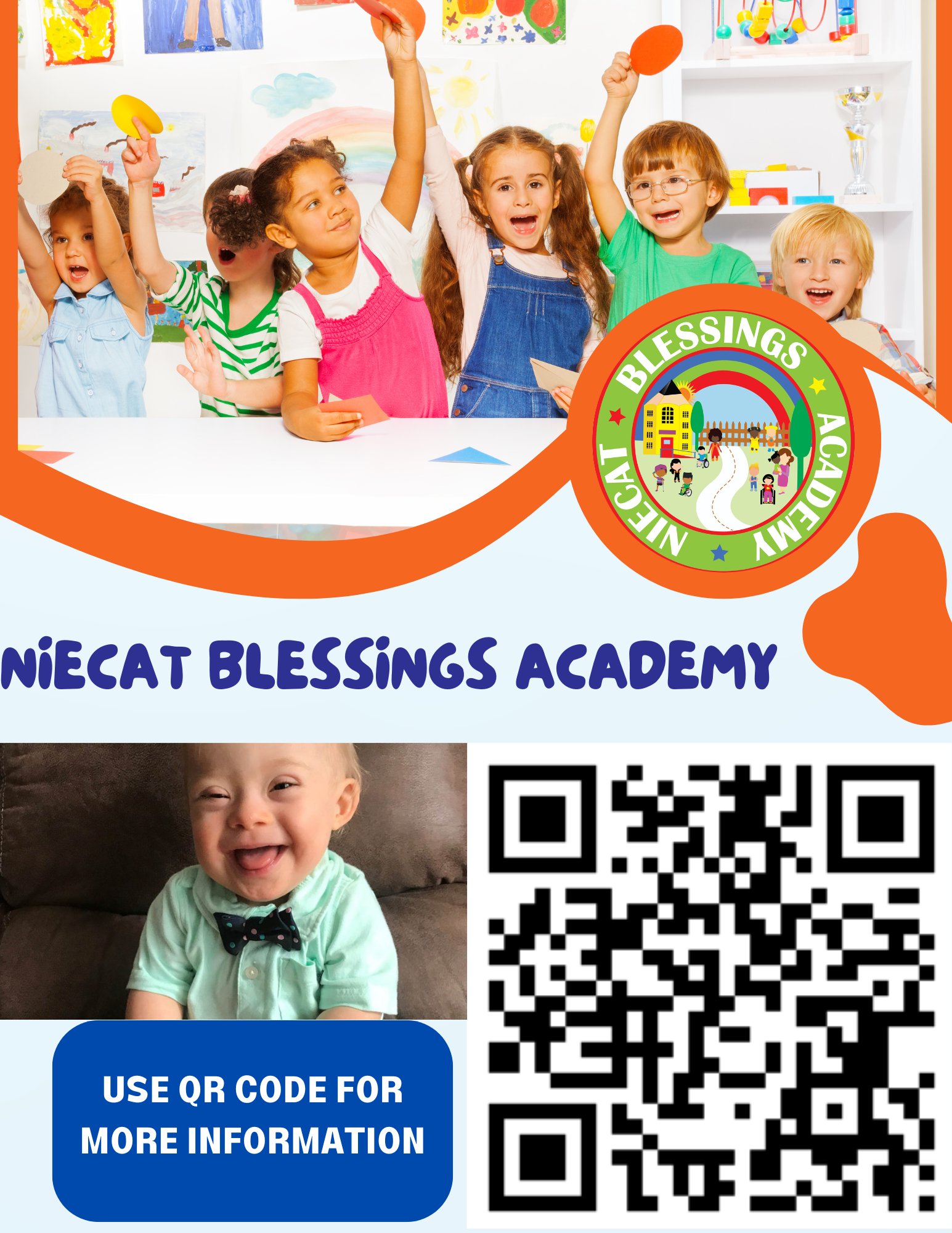
WHAT IS NIECAT BLESSINGS ACADEMY?
NieCat Blessings Academy is a preschool and therapeutic center “EXCLUSIVELY” for three to five-year-olds with special needs. If you need more information, please click on the QR code below:

Miriam CARLOTA Sullivan
Founder/Director
NieCat Blessings Academy
http://www.niecatblessingsnfe.org
(833) 230– 9366 (office)
(305) 761 – 5135 (Cell)

SpecialNeedsParenting #UniqueAbilities #NieCatBlessingsAcademy #ParentEducation #EarlyIntervention #threeyearsold #fouryearsold #miamigardens #hialeah #westhialeah

Balancing Act: Managing Work and Life as a Special Needs Parent

Parenting a special needs child requires a blend of love, patience, and a unique set of strategies to manage both your family’s needs and your professional aspirations. It is a journey filled with challenges and rewards, demanding a careful balance between your career and caregiving responsibilities. This article from NieCat Life Coaching explores practical steps you can take to effectively manage your dual roles, ensuring you provide for your child while also achieving your own professional goals.


Build a Supportive Network
As a parent, building a strong support network is crucial. This network should include family members, friends, and professional caregivers who can provide both practical help and emotional support. These individuals can step in when you need to focus on work or when you simply need a break. This network not only eases your daily responsibilities but also provides a rich source of emotional and moral support, helping you navigate the complexities of parenting a special needs child.


Maintain a Stress-Free Office
To create a stress-free home office, organize your workspace with a clutter-free design and functional layout. You can reduce stress by implementing a storage system for digital and paper records, ensuring ample lighting, and upgrading your technology to keep everything running smoothly and efficiently. These steps will help you maintain focus and increase productivity while keeping the space comfortable and conducive to work.


Communicate with Your Employer
Having an open dialogue with your employer about your situation is essential. This honesty can lead to accommodations that support a better work-life balance, such as flexible working hours, the option to work remotely, or even a part-time schedule. Such adjustments can make a significant difference in managing your stress and ensuring you are present for your child’s important moments.


Set Clear Boundaries
Establishing solid boundaries between your professional responsibilities and family time is vital. Consider designating specific hours reserved exclusively for work, during which family interruptions are minimized, and similarly, protect family time from work intrusions. This structured separation guards against burnout and enhances your efficiency, allowing you to be fully present and effective in both roles.


Be Adaptable
Embrace adaptability as essential when navigating the complexities of parenting a special needs child alongside your career commitments. As circumstances shift—whether due to changes in your child’s requirements or workplace expectations—be ready to modify your plans to stay aligned with current needs. This proactive approach to managing changes reduces stress and guarantees that you effectively address the most critical aspects of your family and professional life.


Prioritize and Set Goals
To optimize your daily schedule, identify your top priorities and establish attainable goals for your work and home environments. This strategic focus helps you concentrate on critical tasks, allowing you to maintain equilibrium and improve overall efficiency. Streamlining your responsibilities alleviates stress and boost productivity, ensuring you meet your objectives without feeling swamped.


Celebrate Every Success
Take time to recognize and celebrate each achievement, no matter how small, in your career and personal life. These moments of celebration foster a positive outlook and can significantly boost your morale. Acknowledging your successes helps reinforce your effectiveness as a parent and a professional, providing a sense of accomplishment and satisfaction.

While the journey of balancing a career and parenting a special needs child is demanding, it is also immensely rewarding. With the strategies above, you can create a fulfilling life for you and your child. Each step taken is a stride toward a more balanced and enriched life, filled with achievement and joy in both your professional and personal realms.

Empowering Young Minds: The Mission of NieCat Blessings Academy

In a world where every child is unique, NieCat Blessings Academy is a beacon of hope and support, dedicated to empowering young minds and nurturing unique abilities. Founded with a vision to transform early childhood education for children with special needs, this innovative institution is set to make a profound impact.

A Vision Realized

NieCat Blessings Academy is not just a preschool; it is a sanctuary where every child is celebrated for their individuality and potential. With the guiding principle of “empowering young minds, nurturing unique abilities,” the Academy will create an inclusive environment where each child’s special needs and unique abilities are acknowledged and supported.

Tailored Educational Approaches

At the heart of NieCat Blessings Academy’s mission is a commitment to providing personalized educational experiences. The Academy’s approach integrates therapeutic strategies with developmental learning, ensuring each child receives the support they need to thrive. From specialized curricula to individualized therapy sessions, every aspect of the Academy is designed to cater to the diverse needs of its students.

Empowering Through Care

The Academy’s logo encapsulates its ethos perfectly. “Empowering young minds, nurturing unique abilities” is not just a slogan but a reflection of the Academy’s objectives. NieCat Blessings Academy aims to help children build confidence, develop skills, and achieve their full potential by fostering an environment where they feel valued and understood.

Building a Supportive Community

NieCat Blessings Academy is committed to building a supportive community around its students. The Academy ensures a comprehensive approach to each child’s development by collaborating with families, healthcare professionals, and educators. This collaborative spirit will create a network of support that benefits not only the children but their families.

Looking Ahead

The excitement and anticipation are palpable as NieCat Blessings Academy prepares to open its doors in 2025. The Academy’s commitment to its mission promises to bring about significant positive change in the lives of many children and their families. With a focus on empowerment and nurturing, NieCat Blessings Academy is poised to set new standards in early childhood education and therapeutic support.

In essence, NieCat Blessings Academy is more than a place of learning; it is a place of hope, growth, and transformation. Through its dedicated efforts and unwavering commitment, the Academy will impact the lives of countless young minds and their families with grace and ease.

If you want to learn more about NieCat, please call (833) 230 – 9366. Please join our Facebook Group: NieCat Blessings Academy Family & Comunity: https://www.facebook.com/groups/949766913327606 Instagram: https://www.instagram.com/niecatblessingsacademy/ and check out our website: www.niecatblessingsnfe.org